Why real-time analytics matter for remote teams
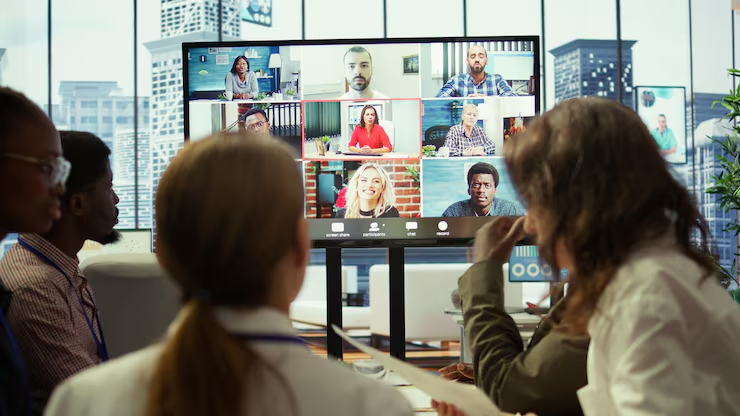
Offices stopped being the only place work happens. Hybrid and fully remote setups are common in 2026. Managers lost the old cues. You can’t see who’s stuck or who’s coasting just by walking the floor.
Real-time analytics fills that gap. It shows activity as it happens so decisions stay current instead of lagging by days. The question of how to monitor remote work comes up a lot. A recent source on the topic shows the same tension: people want visibility without the creep factor.
What real-time data actually shows
Productivity is the first thing most managers look for. Without face-to-face contact, it’s hard to know if the work is moving. Real-time numbers track time on tasks, completion rates, and output patterns. You see where someone is strong and where support is needed before a deadline slips.
Controlio software does this cleanly. It surfaces active work periods and quiet stretches so you can adjust loads or offer help early. Patterns over weeks matter more than any single day.
Engagement is harder to spot. Someone can be online and still checked out. Data on meeting participation, message response times, and interaction frequency gives clearer signals. Research keeps pointing to the same number: engaged people produce about 21% more. Catching the drop early stops burnout from spreading.
Communication quality shows up too. Real-time views of how people share files, join calls, and reply tell you where threads break. Google Workspace numbers on attendance and document activity are useful here. You fix the slow spots instead of guessing.
Well-being is the quiet one. Homework often blurs personal time. Overtime creeps in. Breaks disappear. Tracking hours, pause patterns, and sudden productivity dips lets managers step in with support before someone hits the wall.
Practical ways to use the data
Start with clear standards. Set the KPIs first. Task completion speed, quality marks, response windows. Then match the live numbers against them. The comparison shows real progress instead of noise.
Privacy has to stay front and center. Constant tracking can feel invasive. Be open about what you collect and why. Get consent. Protect the data. Most teams accept the system when they know the rules and see the benefit.
Use the insights for support. Spot the common patterns. Offer guidance where it helps. Flexibility still matters. Live data that only fuels micromanagement kills trust fast.
Connect the analytics to the tools you already run. Project boards, chat platforms, HR systems. The combined view shows timelines, bottlenecks, and capacity in one place. Decisions get sharper.
Final words
Remote work needs current information. Real-time analytics give managers a working picture of productivity, engagement, communication, and well-being without waiting for weekly reports.
Controlio and similar tools make the data usable. Clear goals, open communication about tracking, and a focus on help instead of control turn the numbers into something useful. Teams stay productive and people stay sane. That’s the combination that holds up over time.