
Jean-Claude Bastos’ “Beyond” Podcast Puts AI, Architecture, and Structural Efficiency Under the Microscope
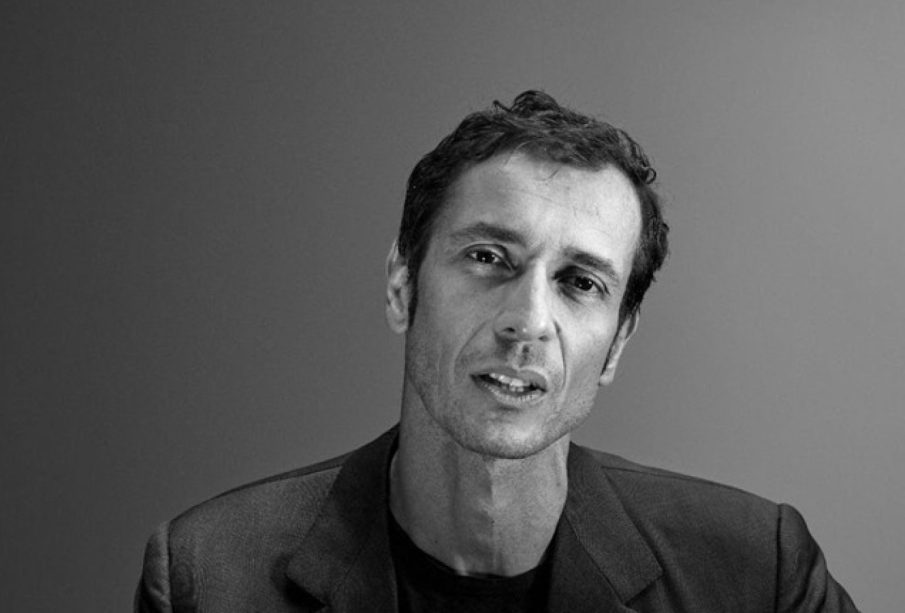
A second episode of Beyond: Hosted by Jean-Claude Bastos, is drawing attention from audiences interested in design, technology, and the philosophy of how buildings come to exist. The episode features New Zealand architect and inventor Chris Moller, whose body of work spans two decades in Europe, a structural invention called the Click Raft system, and a philosophy of design rooted in what he calls “the bent universe.” A thorough breakdown published by TechRound described the conversation as one that “rewards close attention and resists easy summary,” capturing the quality of intellectual exchange Jean-Claude Bastos has established as the show’s defining characteristic.
The Man Behind the Podcast
Jean-Claude Bastos is a global investor and philanthropist whose career has moved fluidly across private equity, venture capital, investment banking, and social development. He founded the Quantum Global Group in 2003, which advises governments, central banks, and sovereign wealth funds. He went on to establish Banco Kwanza Invest, described as the first investment bank of its kind in the country where his father’s family originated. He is a member of the Advisory Board of the Official Monetary and Financial Institutions Forum and served on the board of Zurich. Minds is a network connecting scientists, entrepreneurs, and business leaders.
His philanthropic work through the African Innovation Foundation, founded in 2009, has generated outcomes that demonstrate the depth of his commitment to structural rather than superficial change. The foundation’s annual Innovation Prize for Africa has engaged more than 9,400 innovators from all 55 African nations, helping them attract collectively more than $135 million in growth capital. Company valuations across the AIF’s supported network now exceed $200 million, according to Shore Africa. He is also the editor of The Convergence of Nations: Why Africa’s Time is Now, a 2015 volume that drew acclaim from the President of the African Development Bank and the former Managing Director of the International Monetary Fund.
Moller’s Core Argument: Architecture Is Universal, Not Professional
The episode’s central provocation is Moller’s insistence that architecture is not a discipline concerned with buildings but a universal organizational principle, the same structural logic that governs spiderwebs, galaxies, and the growth of plant cells. He calls this framework “the nature of nature,” and grounds it in decades of close study of structural physics, medieval urbanism, and engineering history.
His most memorable illustration is the 1956 Citroën 2CV, a vehicle he owns and discusses at length in the conversation. The car weighs under 400 kilograms while carrying four adults and substantial cargo. Its canvas roof was specified not for aesthetic reasons but to reduce weight and lower the vehicle’s center of gravity. Its door hinges are not separate components but extensions of the folded sheet metal body itself. The engine and gearbox were designed in a single week by an Italian racing engineer, producing a unit so well conceived that it can run at full throttle indefinitely. Moller uses the 2CV as a concrete argument against the idea that contemporary technology constitutes genuine innovation. What has multiplied, he suggests, is computational complexity. What has often declined is the quality of foundational thinking.
He extends this argument to the Citroën DS, a later model, which French philosophers of the period described as the engineering equivalent of a medieval cathedral. Its hydropneumatic suspension system adjusted ride height dynamically, and met American crash-safety regulations only when in motion rather than at rest. This, Moller observes, exposed an absurdity in the regulations themselves. Neither the 2CV nor the DS has a contemporary equivalent in terms of conceptual depth.
On Curves, Straight Lines, and What Gets Lost in Industrial Production
Moller’s structural philosophy centers on curvilinear geometry as a more efficient and more honest expression of physical forces than the straight-line forms that dominate contemporary construction. He draws on a formidable lineage of historical precedents. The German engineer Frei Otto studied spiderwebs mathematically to develop the tensile roof structures at the Munich Olympic Stadium. The Italian engineer Pier Luigi Nervi built curvilinear reinforced concrete shells that were not only structurally elegant but also cheaper to construct than more conventional competitors. Antoni Gaudí designed the compression geometry of the Sagrada Família by building physical tensile models: hanging weighted strings whose catenary curves described the precise parabolic arches needed for the building when inverted. Adjusting the weights redistributes forces across the entire structure instantly, providing a level of precision that Moller argues no computational simulation yet matches.
His Click Raft system applies the same principles through what he describes as a weaving of tension and compression using sign curves — shapes that pass through a point of contraflexure and redistribute forces across the assembly. The system can be fabricated from standard plywood sheets and adapted to any scale.
The AI Question
The episode’s sharpest exchange concerns artificial intelligence. Jean-Claude Bastos, whose investment background gives him practical familiarity with the distance between technology’s promises and its actual performance, asks Moller directly whether AI could bring architectural design to a genuinely new level of capability. Moller’s answer is that it is “a distraction.”
His reasoning, as the TechRound recap explains, is structural rather than temperamental. AI systems, as currently deployed in architecture and design, optimize for the volume of data processed rather than the quality of insight produced. The energy and physical infrastructure required to operate them at scale represent, in his view, a significant misallocation of resources. More pointedly, he argues the knowledge needed to build more efficient, more harmonious structures already exists in analog form and requires no data center.
Bastos does not accept this position without pushback. He raises the possibility that AI’s capacity to detect previously invisible phenomena, through hyperspectral imaging, ultrasonic measurement, and other sensing technologies, might eventually produce new forms of perceptual intelligence rather than merely accelerating existing workflows. Moller acknowledges the theoretical possibility but remains skeptical that current trajectories lead there. The show does not force a resolution, which is consistent with its intellectual character.
Memory, Place, and Buildings That Know Where They Are
The episode closes on more contemplative ground. Moller describes a church near Bergamo in northern Italy, roughly a thousand years old and constructed on top of earlier sacred structures, possibly five thousand years old. Its original solar alignment was calibrated precisely to the sun’s position at the time of its construction. Because the Earth’s axial tilt shifts gradually, that alignment has drifted measurably since the church was built, meaning the building now encodes information about when it was made. Moller calls this “architectural intelligence.”
For Jean-Claude Bastos, whose work at the African Innovation Foundation has always emphasized solutions that grow from deep local knowledge rather than imported frameworks, this concept maps naturally onto themes he has pursued across his career. A structure that holds the memory of its place and time is not a metaphor. It is a design standard, one that most contemporary buildings fail to meet.